Nvidia’s controversial DLSS 5 technology is working its magic on Hogwarts Legacy today, but this time the AI isn’t trying quite so hard to reinvent everything it touches.
The blockbuster wizarding adventure becomes just the second game to officially support DLSS 5, following September’s NBA 2K27. Unlike traditional DLSS upscaling, Nvidia’s new neural rendering technology uses generative AI to inject more realistic lighting and material details into games. The results can be downright astonishing.
The AI-augmented images are also controversial as heck.
When Nvidia first unveiled DLSS 5 in March, gamers recoiled at the AI-enhanced character makeovers, which sometimes made familiar faces look like entirely different people. Some developers reportedly didn’t even know their games would appear in Nvidia’s showcase. The Hogwarts Legacy implementation looks considerably more restrained, following a summer of Nvidia stressing that DLSS 5 will have intensive develop controls.
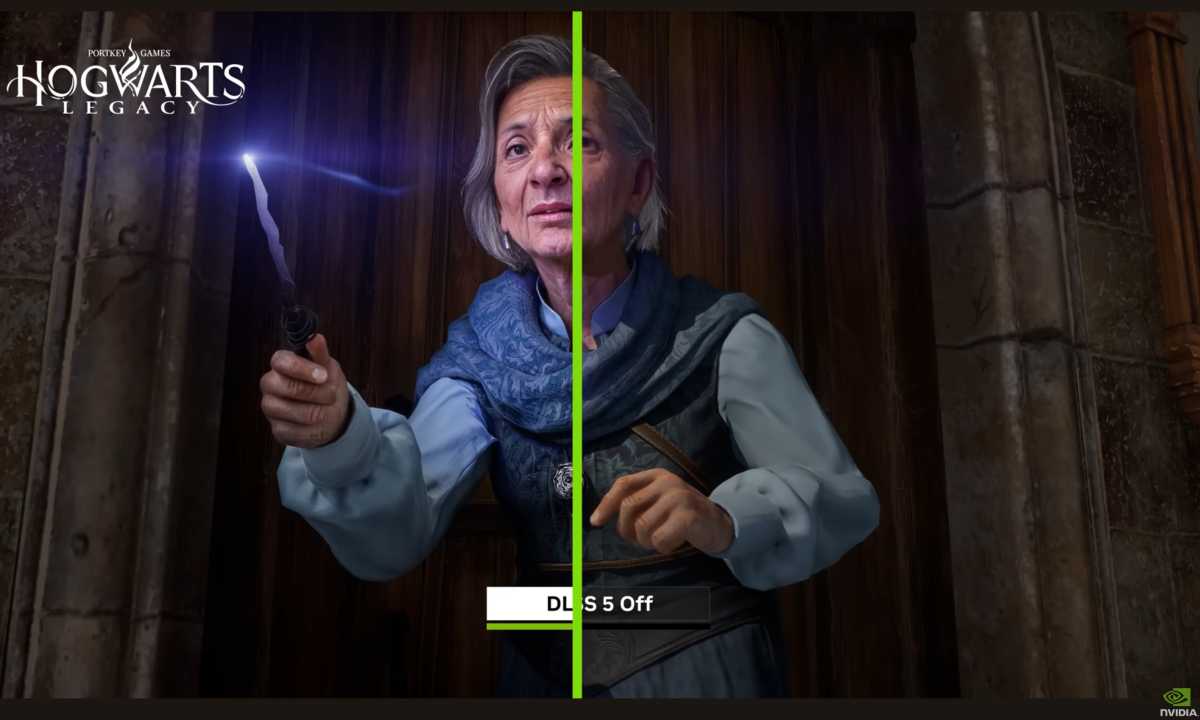
The original Hogwarts Legacy implementation in DLSS 5’s launch trailer in March made characters look atrocious, like they’ve been passed through a yassification filter.
Nvidia / YouTube
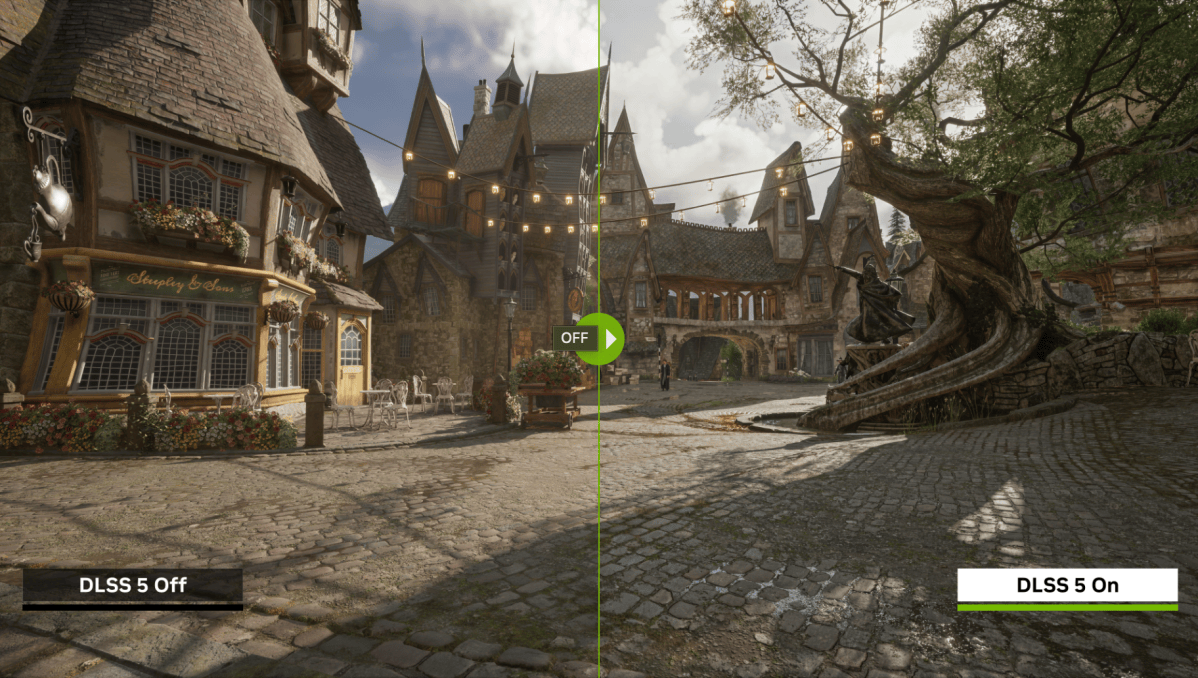
Nvidia’s official before-and-after comparisons show richer lighting and deeper shadows throughout Hogsmeade. Moss stands out against weathered rooftops, foliage casts more convincing shadows, and the stonework gains an almost tangible depth. Character changes are subtler, without the dramatic facial transformations that kicked off the original uproar — at least in the promotional images.
Avalanche Software worked with Nvidia to dial things back. DLSS 5 lets developers adjust lighting and structural detail independently, choose different neural models for different scenes, and use masking tools to keep the AI from mucking with specific objects or characters. Avalanche says it fine-tuned Hogwarts Legacy’s environments, lighting, and skin details to preserve the game’s original artistic vision.
Good! Because making a game look more realistic doesn’t necessarily make it look better.
Nvidia
I got an early look at DLSS 5 in NBA 2K27, and the lighting and character detail were genuinely startling. NBA players looked almost like their real-life counterparts.
Then they started moving. Suddenly, the slightly stiff animations that normally blend into a video game became painfully obvious. DLSS 5 had made the players look so lifelike that their movements couldn’t keep up with their appearances. The better the graphics looked, the more distracting the animation became.
Hogwarts Legacy could face similar growing pains, though Nvidia’s screenshots can’t tell us how its neural rendering holds up in motion. Basketball players are actual people though, so I’d expect the feeling to be less pronounced in Hogwarts.
Remember when Nvidia needed two monstrous RTX 5090 graphics cards to demonstrate DLSS 5 back in March? Now it runs on a single supported GPU.
Nvidia claims a tenfold performance improvement since that original showcase. Its latest neural rendering model runs twice as fast as September’s version while using 20 percent less VRAM at 4K. DLSS 5 supports GeForce RTX 50-series desktop and laptop GPUs, RTX Spark systems, and GeForce Now Ultimate.
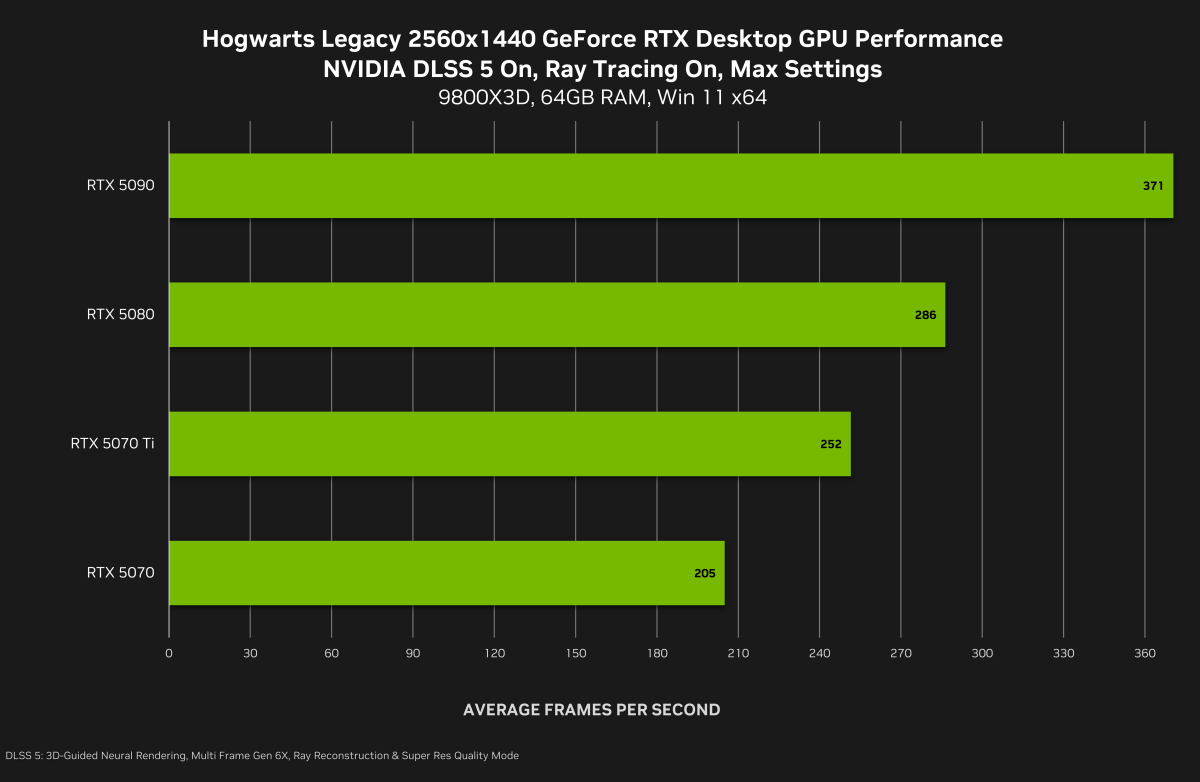
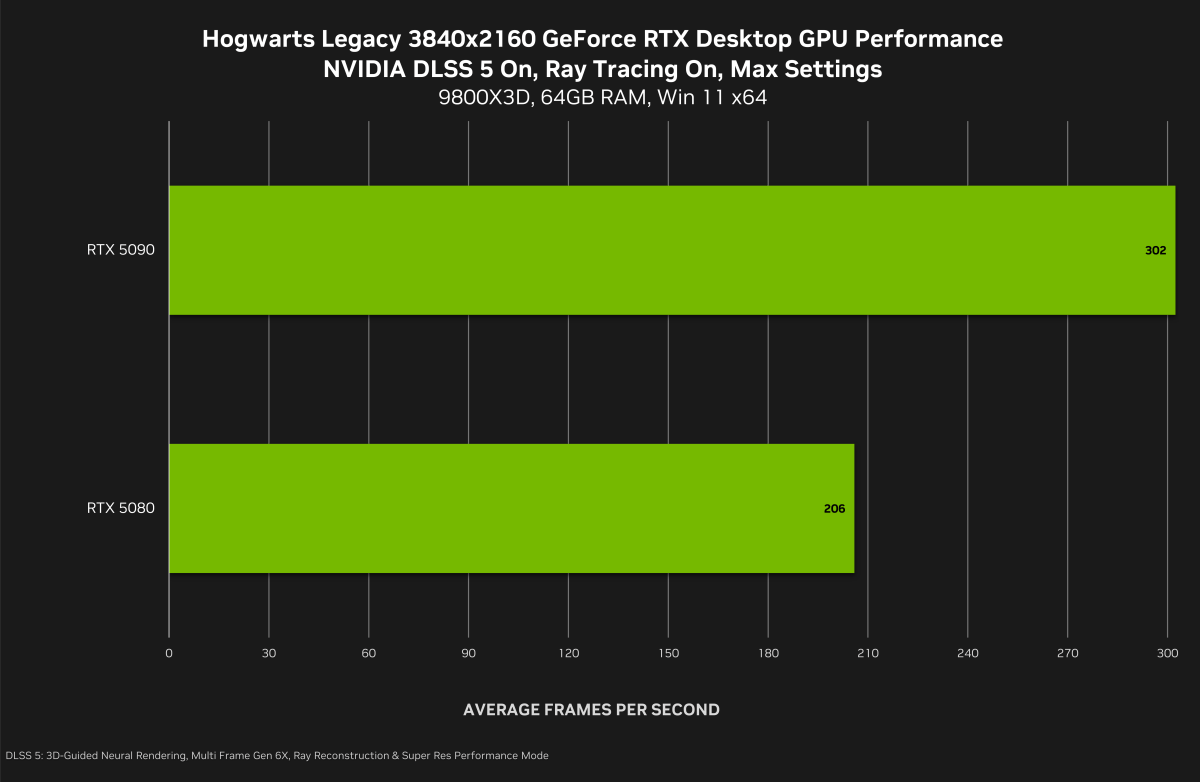
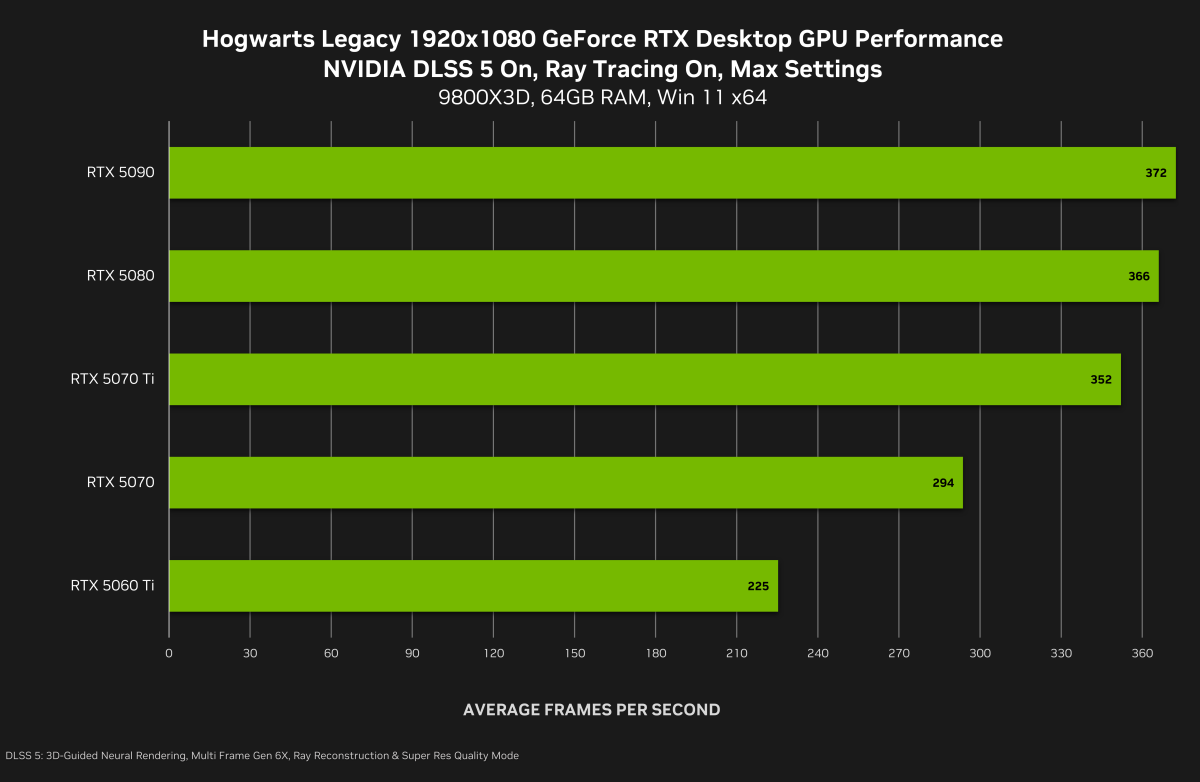
Nvidia also touts up to 300fps at 4K on an RTX 5090 with maximum settings and ray tracing enabled, though that’s with 6X Multi Frame Generation, not 300 traditionally rendered frames. You can see Nvidia’s claimed performance per resolution in the slideshow above.
To try it yourself, install the latest Nvidia driver and Hogwarts Legacy update, then enable Neural Rendering in the game’s graphics options. War Thunder gets DLSS 5 later this month, with Where Winds Meet following November 23.