
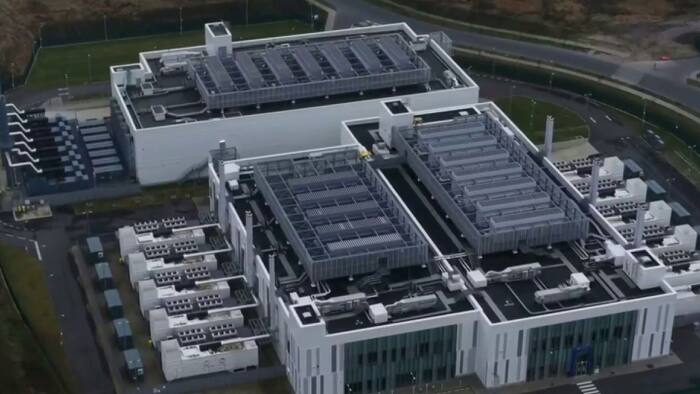
As demand for artificial intelligence continues to grow, a new survey from the University of Houston shows Texas voters are increasingly concerned about the impact data centers could have on their communities, particularly when it comes to electricity costs, water supplies and power outages.
The University of Houston’s Hobby School of Public Affairs surveyed 2,000 likely Texas voters and found that 79% support limiting the number of data centers that can be built across the state.
An overwhelming 99% believe companies building data centers should be responsible for paying for any electrical grid expansion required to power their operations.
The findings come as data center development becomes a growing issue on the campaign trail ahead of the November 3 election.
Concerns about higher electric bills and property values
Data centers are large facilities that house computer servers and other equipment needed to support artificial intelligence, cloud computing and digital services.
These facilities require significant amounts of electricity to operate and often use water for cooling.
According to the survey, more than 80% of Texas voters expressed concern about the potential impact of data centers on electricity prices, water supplies and power outages.
About two-thirds said they were extremely or very concerned about those issues.
The survey also found:
These findings reflect voters’ expectations and concerns, rather than measured changes in utility bills or property values.
Are data centers worth the investment?
Supporters of data center development have pointed to potential economic benefits, including job creation, increased tax revenue and improvements to local infrastructure.
However, the University of Houston survey found many Texas voters remain skeptical about those promises.
When asked about job creation, 40% said data centers would not have a beneficial impact, compared with 33% who believed they would.
Similarly, 38% said data centers would not benefit local tax revenue, while 33% believed they would.
Public officials who supported the buildout of data centers have touted the benefits for jobs, tax revenues and the overall economy.
Still, voters did recognize potential advantages.
The survey found 45% believe data centers could have an extremely or very beneficial impact on technological advancement in their communities.
Another 40% believe the facilities could provide significant improvements to local electrical infrastructure.
Concerns cross political and demographic lines
Researchers found concerns about data centers were widespread among Texas voters, although the level of concern varied by political affiliation.
Younger voters, along with Black and Latino voters, generally reported higher levels of concern.
When asked specifically about electricity prices:
Texans also skeptical about artificial intelligence
Beyond concerns about data centers, the survey examined how Texas voters believe artificial intelligence will affect society over the next decade.
A majority expressed negative expectations.
According to the findings:
However, voters were nearly evenly divided when asked how AI would affect their own lives.
The survey found 37% believe artificial intelligence will hurt them personally, while 35% believe it will help. Another 28% expect it to make no difference.
Political affiliation also played a significant role in voters’ expectations about AI’s economic impact.
Among Democrats, 81% believe AI will hurt the economy, compared with 13% who believe it will help.
Among Republicans, 57% believe AI will benefit the economy, while 32% believe it will hurt.
Independent voters were more pessimistic, with 56% expecting a negative economic impact and 34% anticipating a positive one.
What does this mean for Texas?
The findings highlight a challenge for state and local leaders as companies look to expand data center operations to meet growing demand for artificial intelligence and digital technology.
While voters recognize the potential for technological advances and infrastructure improvements, many are concerned about the costs communities could face.
The survey suggests that requiring data center operators to cover the cost of necessary electrical grid expansions has broad support among Texas voters.
With Election Day approaching, those concerns are becoming part of the broader conversation about economic development, energy infrastructure and the future of artificial intelligence in Texas.


